Who Was Hosea Doton?
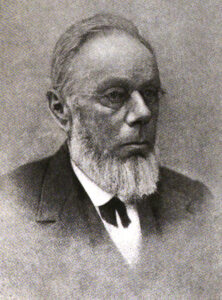
- Hosea Doton was born in Pomfret, Vermont on November 29, 1809 and lived there some fifty years as a farmer, teacher, and surveyor.
- Hosea grew up on a farm on Cloudland Road built by his father, John Edward Doten, in 1812.
- Hosea did not go to college, but was widely read and tested all of the theories he learned. He mastered the subjects taught in schools, and particularly focused on math and the sciences. Norwich University awarded Hosea a Master of Arts degree in 1845 for, “his knowledge of the ARTS and SCIENCES.”
- Hosea started keeping a daily diary in 1840 in which he recorded his work, finances, and interactions with family and friends. Twenty-six of his diaries are archived by the Pomfret Historical Society. They have been transcribed and are available in a searchable file below.
- Hosea began preparing astronomical content for a Vermont almanac in 1842. He received $15 from publishers Haskell & Palmer and continued to do these calculations each year for the rest of his life.
- Hosea respected both religion and science, and was a longtime member of the Universalist Church in Woodstock.
- Hosea represented Windsor County in the Vermont State Senate in 1865-1866.
- Hosea taught at most of the schools in Pomfret and served as Superintendent of Schools. He trained and administered annual examinations of Pomfret teachers. After moving to Woodstock in about 1868, Hosea did the same thing there.
- Hosea surveyed and selected the route of the Woodstock Railroad, and was its chief surveyor when it opened in 1875. He was instrumental in planning the excavation through Shallies Hill and locating the bridge over Quechee Gorge.
- Hosea was asked to survey and engineer private and civic sites around Woodstock. He designed the iron railing around the Woodstock Common, the boundary of Tribou Park, the foundation of the Norman Williams Library, and a new racetrack at the fairgrounds. He also helped confirm the boundaries between Woodstock, Pomfret, Barnard, Hartford, and Taftsville.
- Hosea monitored the daily temperature, barometric pressure, and rainfall and provided weekly reports in the Vermont Standard. He also sent monthly weather reports to the U.S. Signal Service in Washington D.C.
- Hosea Doton died on January 17, 1886 and was buried in Woodstock’s River Street Cemetery. His grave is marked by a monument erected by grateful students and friends.